AI smartphone cameras: real gains or rendered reality?
You point your phone at a sunset, tap once, and the picture that comes back looks better than what your eyes just saw. Brighter sky, deeper colour, more detail in the shadows. That gap between the scene and the photo is where the last three years of smartphone camera progress happened.
Here is the uncomfortable part. Phones have improved faster as image makers than as cameras. Some of that progress comes from bigger sensors and better glass. But a growing, perhaps now dominant, share in recent upgrades comes from AI software deciding how to compose your photo.
Understanding these dynamics is worth it before you spend increasingly serious money. So: how to tell a real optical gain from a rendered one, which smartphones made physical camera progress, and why a refurbished model, professionally checked and reconditioned rather than second-hand, often carries the same camera hardware as the current generation. refurbed sells the phones in question, which is exactly why the honest version is more useful here than the marketing one.
The four layers inside every AI smartphone camera
AI camera covers four very different things, and lumping them together is how the argument gets confused. Sort them by one test: does the layer invent scene content?
Conventional image processing. Demosaicing, white balance, colour conversion, lens correction. Every digital camera has done this for decades. It invents nothing.
Measurement-based computation. Burst denoising, HDR fusion, multi-frame super-resolution. The phone takes several exposures and combines them, so the extra detail comes from extra light that was measured. This is engineering, not trickery.
Semantic rendering. Faces, skin, sky, foliage and shadows get treated separately, with sharpening applied here and smoothing applied there. Nothing new enters the frame, but the tonal relationships you remember from the scene can be rearranged.
Generative and composite imaging. Diffusion-based zoom, reconstructed textures, swapped expressions, generatively expanded edges. This layer can put things in your photo that were never recorded.
The first two layers are why phone photos improved so much. The fourth is why the argument exists. It also explains the gap between a RAW file, which keeps the sensor's incomplete evidence, and the JPEG your phone hands you, which is a finished editorial product.
Recovered detail, or invented detail: the test that settles it
One question sorts almost every camera claim you will read: did the phone recover information from additional measurements, or synthesise information because it looked plausible?
Picture a hearing aid next to pitch correction. A hearing aid lifts a weak signal that was present in the room. Pitch correction makes a signal match what a voice is supposed to sound like. Denoising is the hearing aid. Generative enhancement is the pitch correction.
The second one has a useful name: plausibility laundering. A smooth, detailed, confident-looking output makes uncertain information look authoritative. You cannot see the uncertainty, because the uncertainty was polished away.
Adobe drew the line cleanly in its Project Indigo research. Its multi-frame super-resolution uses the tiny frame-to-frame differences caused by your own hand movement, so added detail comes from several real observations of the scene. Adobe explicitly contrasts that with AI super-resolution which hallucinates plausible texture.
Which leaves an odd conclusion. A recent flagship can be better at producing attractive memories, only marginally better at physically recording detail, and less reliable as a witness, all at once.
The twenty exposures behind a single tap
You press the shutter once. Your phone fires as many as twenty exposures in a few milliseconds, aligns them, merges them, then adjusts skin tones, lifts shadows and re-renders the sky before it shows you anything.
Here is a test that takes thirty seconds. Open the camera on a recent iPhone, tap 3x, then cover the main lens with your finger. In lower light the frame goes dark, because the phone never switched to the telephoto camera at all. It cropped the main sensor instead. The telephoto module has a smaller sensor and a smaller aperture, so in dim conditions that crop beats the dedicated lens. Marques Brownlee demonstrated this on the iPhone 13 Pro, and the behaviour is still around.
That is defensible engineering. It is also a decision you did not make.
Google went further with the Pixel 6, running the main camera and the ultrawide at two different shutter speeds simultaneously. Detect a blurred face, lift a sharp copy of it from the other sensor, merge it in. Nobody asks first. The look of your photo belongs, in part, to somebody else's tuning decisions.
Moon mode: how one texture started the argument
- The Huawei P30 Pro arrives with a periscope zoom, and pointing it at the Moon makes the camera recognise the subject and offer moon mode. People post their results, and the results look strangely consistent. Anyone who has tried to photograph the Moon with a phone knows it usually comes back as a pale blob. These came back with craters.
Android Authority concluded that a stored lunar texture was being merged into the shot. Huawei denied it. The theory was awkwardly plausible for one reason: the Moon is tidally locked to Earth, so the same face always points at us. A single stored image covers everybody's photo, forever.
Samsung's version is documented by Samsung. Since the Galaxy S21 generation, Scene Optimizer recognises the Moon, stacks more than ten frames, reduces noise and applies deep-learning detail enhancement. Samsung's own support pages acknowledge that the sky may be darkened to make the Moon stand out.
Then came the test that made it concrete. As described by AppleInsider in 2023, someone shrank a Moon photo to 170 by 170 pixels, blurred it heavily, displayed it on a monitor and photographed it from across a room. The output came back with crater structure that no longer existed in the source. Not sharpening. A learned idea of the Moon overriding weak evidence.
Samsung deserves its due here: much of that pipeline is legitimate burst fusion. The objection is narrower and more precise. It is the exact point where a known appearance starts substituting for captured detail.
The most recent case is the clearest of all. In August 2026, Frandroid reported that Xiaomi 17 Ultra Supermoon processing classified an orange eclipsed Sun as the Moon and laid lunar relief over it. Switching the feature off prevented it. A round object in a dark sky met a model trained to expect the Moon, and the model won.
Composite memories: photos of moments that never happened
Zoom artefacts happen to mountains. This one happens to your family.
Google describes these as camera features on its own product blog, which is worth saying plainly, because none of it is hidden. Best Take can combine facial expressions captured seconds apart, so nobody is blinking. Add Me merges separate captures so the person holding the phone appears in the group shot. Auto Frame can generatively expand the edges of a photo. Reimagine can replace grass, skies, trees or interior details.
Google's framing is that Best Take preserves the memory of the moment. The expressions in the final image never coexisted in one exposure.
Compare the two mechanisms. Burst fusion asks several exposures what happened and takes the consensus. Best Take assembles the remembered event out of nearby moments. One is a set of witnesses agreeing. The other is a composite memory.
None of this is new, and none of it belongs to one brand. A Nokia Lumia in 2012 let you hold the shutter, then scroll through five captured faces and pick a favourite. FaceTime has a setting that nudges your pupils so you appear to look into the lens while you are looking at the screen.
The manufacturers have taken visibly different positions. Samsung has argued that no digital picture is wholly real. Google emphasises being faithful to the memory rather than to one specific millisecond. Apple presents photography as celebrating something that happened. Three companies, three definitions of the word photo. Worth knowing which one you are buying, on a Google phone or anything else.
AI smartphone camera zoom: better telescope or better illustrator?
Optics show you more of a distant subject. Generative zoom draws you a more convincing version of it. That distinction decides whether your 30x photo is evidence or an illustration.
Start with the legitimate version. Google's earlier Super Res Zoom merged underexposed frames and exploited the subpixel movement of your own hand. That is measurement, and it works.
Then the step change. Google states that Pixel 10 Pro zoom uses an on-device diffusion model which fills in missing information and extrapolates detail the sensor could not physically capture. Read that phrasing twice: could not physically capture. Those pixels are not recovered. They are drawn.
Honor's optional cloud-based AI Super Zoom engages at long focal lengths. In a published field test, the crest of a distant mountain came back carrying a dolphin-like shape that was not in the scene. The reviewer's comparison was apt: it is like asking somebody else to draw the picture for you.
Here is the part that matters when you are choosing a phone. That output can look higher quality in a social feed while being less accurate. Sharper is not the same as truer.
The practical tell is repetition. Real optical detail is stable, so photograph the same distant sign three times and the letters stay put. Invented detail wanders. Lettering changes, leaves rearrange, brickwork reshuffles from frame to frame.
Has smartphone camera hardware hit a plateau?
Compare two generations of the same flagship and the answer gets specific.
The Galaxy S25 Ultra carried over its predecessor's main camera and both telephoto modules. The substantial hardware change was the ultrawide, which went from 12 MP to 50 MP. Reviewers found ordinary daylight stills and night results remarkably similar between the two, with most of the visible difference coming from software.
Apple's pattern looks much the same. The iPhone 16 Pro showed little visible detail improvement over the 15 Pro on the main camera. Its real advances sat elsewhere: a 48 MP ultrawide, better macro detail, less flare and faster capture. Those are real gains. They are also gains in specific modules, not across a whole camera system.
One popular piece of evidence deserves a caveat. In the large 2023 blind camera test, the affordable Pixel 7a beat far costlier flagships. That shows Google is excellent at producing an immediately likeable JPEG. It does not show that the Pixel resolves more detail, because the test used a handful of scenes, default settings and subjective voting. Preference and fidelity are different measurements.
Galaxy S23 Ultra vs Galaxy S25 Ultra: two years of camera changes
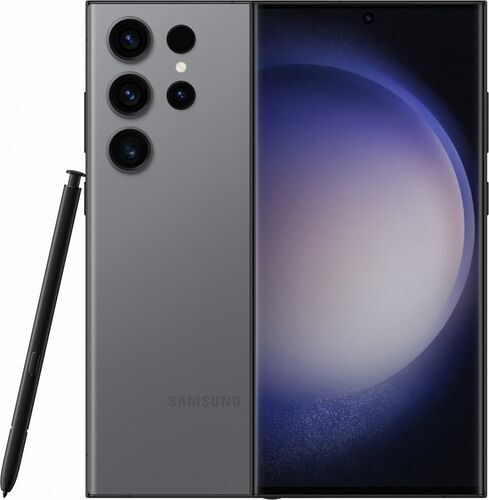
Year of release
2023
Main camera
200 MP
Ultra wide camera
12 MP
Telephoto cameras
10 MP + 10 MP
Front camera
12 MP
Processor
Snapdragon 8 Gen 2 for Galaxy
Battery
5000 mAh
Weight
234 g
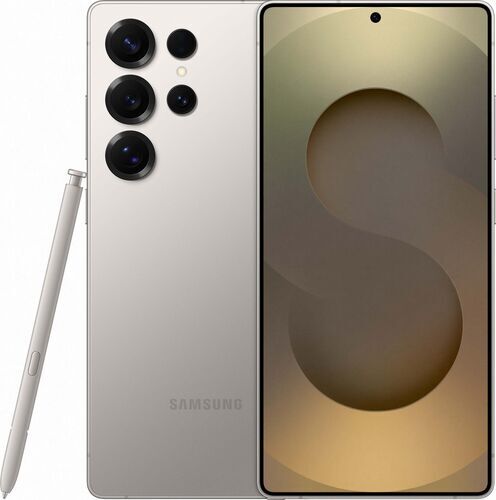
2025
200 MP
50 MP
50 MP periscope + 10 MP
12 MP
Snapdragon 8 Elite
5000 mAh
219 g
Phones where AI smartphone camera gains are physical
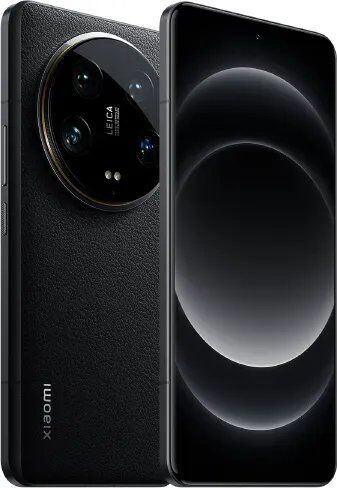
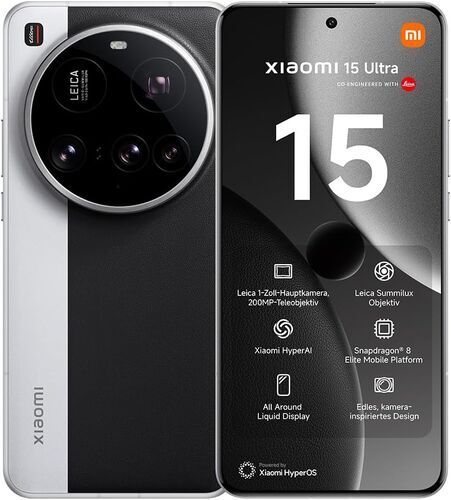
Xiaomi Ultra: where the sensor did the work
Judge camera progress one module at a time, not one phone at a time. A phone can add a real telephoto and lose ground on its ultrawide in the same year. Xiaomi's Ultra line is the clearest recent run of physical change you can point at.
The Xiaomi 14 Ultra runs three 50 MP cameras, main, ultrawide and telephoto, on a 5000 mAh battery. Reviewers who tested it credited a large main sensor, a physical variable aperture and strong RAW controls, which is the toolkit you want if you process your own files. The honest caveat: highlights could clip, and long digital zoom still fell apart.
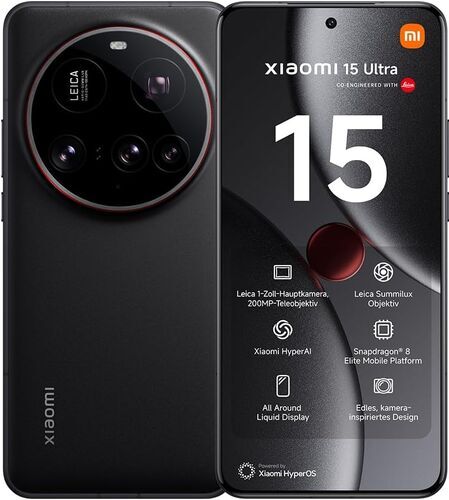
The Xiaomi 15 Ultra adds a fourth camera, a 200 MP telephoto, alongside the same three 50 MP modules and a 5410 mAh battery. That extra module is a physical addition rather than a processing update, and it shows up in medium and long zoom. The honest caveat: the variable aperture disappeared.
The Xiaomi 17 Ultra keeps the four-camera layout, moves the front camera from 32 MP to 50 MP and steps up to a 6000 mAh battery behind a 6.9 inch screen. It is also the phone that read an eclipsed Sun as the Moon. Both things are true at once, which is the whole case for judging module by module instead of crowning a winner.
Apple, Google and Samsung: the honest per-module gains
The plateau argument is about marketing claims, not about whether these phones take good photos. They do. Here is where the hardware moved.
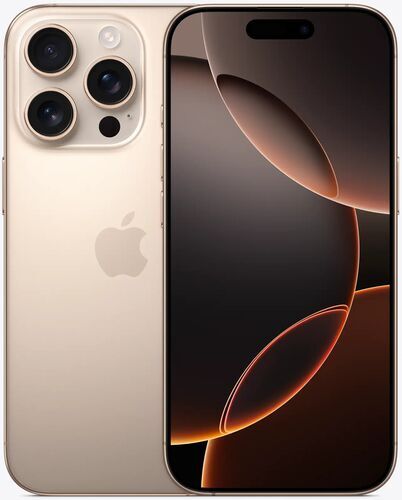
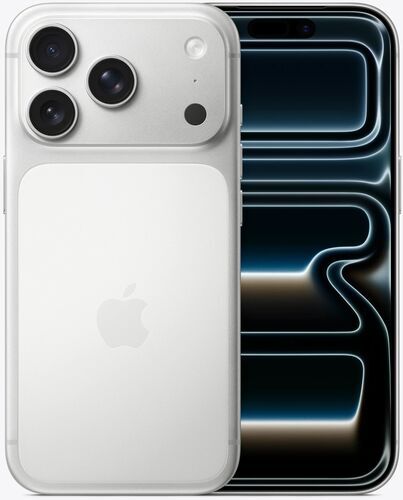
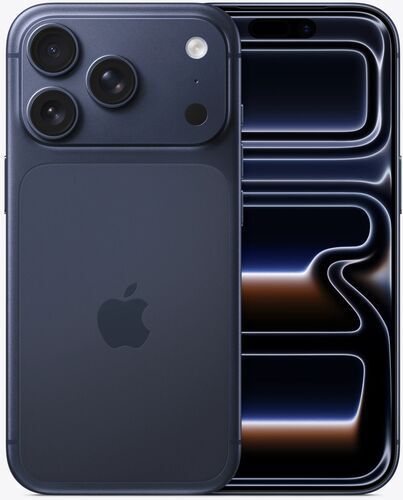
The iPhone 16 Pro pairs a 48 MP main camera with a 48 MP ultrawide and a 12 MP telephoto. The ultrawide is the story: that module carries the real gain, along with better macro detail and faster capture. The main camera sits close to what came before it.
The iPhone 17 Pro moves the telephoto from 12 MP to 48 MP and the front camera from 12 MP to 18 MP, on the A19 Pro chip with a 4252 mAh battery. A telephoto that quadruples in resolution is a hardware change, not a software update.
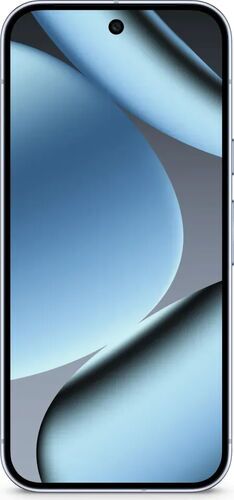
The Pixel 10 Pro runs a 50 MP main camera with a 48 MP telephoto and a 48 MP ultrawide, the same camera layout as the Pixel 9 Pro, on the newer Tensor G5. Its default rendering is the most immediately likeable in the category. Its longest zoom leans on the diffusion model described earlier, so switch that off when accuracy matters more than sharpness.
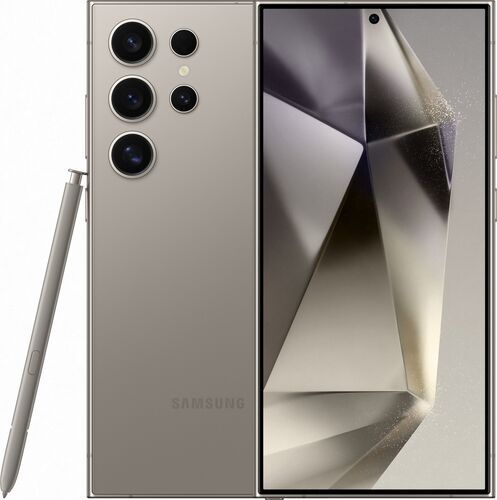
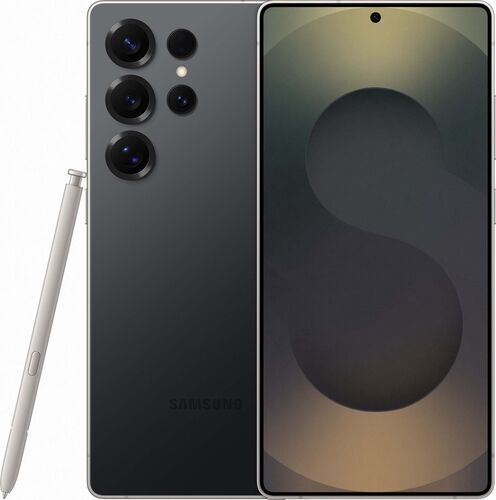
The Galaxy S24 Ultra swapped the S23 Ultra's second 10 MP telephoto for a 50 MP periscope. That bought flexibility across some ranges rather than a universal leap in zoom quality.
If a physically better telephoto is the priority, the Xiaomi Ultra line above gets you there faster. If you want iPhones or Samsung phones, buy for the module you will use most.
Eight ways to test an AI smartphone camera yourself
You do not need a lab. Eight checks separate a camera that records more from a camera that renders better.
Shoot RAW. If detail sits in the JPEG but not in the RAW file, it was added rather than captured.
Switch the AI off. Scene Optimizer, AI zoom and generative enhancement all have toggles. Use them before judging anything.
Stay at native focal lengths. Compare 1x, 3x, 5x and 10x optical modules first. Judge the 30x to 100x marketing modes separately, if at all.
Repeat the shot. Real optical detail is stable across frames. Invented lettering, leaves and masonry shift between them.
Point it at something moving. Children, animals, hair and hands expose multi-frame fusion errors that a static landscape hides.
Read tonal relationships, not just microcontrast. Sharpening halos and aggressive local tone mapping can make a photo look detailed while being less faithful to the light that was in the room.
Test in ugly conditions. Backlighting, motion, mixed colour temperatures and dim light reveal whether an improvement comes from better light collection or from scene-specific beautification.
Separate pleasant from accurate. Both are legitimate goals. They are not the same measurement, and camera marketing quietly conflates them.
For the strictest version of this line, look at how photojournalism handles it. World Press Photo accepts normal smartphone mode but rules out generative enlargement and any process that adds or removes information, and can require the original camera files. If you want the opposite of a computational look, minimal-processing camera apps exist: Halide's Process Zero deliberately shoots a single frame, handing back grain and a narrower dynamic range in exchange for leaving the pipeline alone.
AI smartphone camera questions, answered
Does my phone fake Moon photos? Some do, in specific modes. Samsung documents that its Scene Optimizer applies deep-learning detail enhancement to the Moon and may darken the sky around it. Turn scene optimisation off and the Moon comes back the way your lens sees it.
Is computational photography cheating? No. Burst denoising, HDR fusion and multi-frame super-resolution combine real measurements of real light. The line worth watching is generative reconstruction, which can add detail that was never recorded.
Which is more accurate, RAW or the default JPEG? RAW. It keeps the sensor's incomplete evidence, noise included. The JPEG is a finished interpretation, tuned by the manufacturer to please you at first glance.
Can I switch the AI processing off? Partly. Scene optimisation, AI zoom and generative enhancement are toggles on most phones. Core multi-frame fusion usually is not, which is why minimal-processing camera apps exist.
Is an older refurbished camera phone still a good buy? Yes. Recent gains sit in individual camera modules rather than spreading across whole phones, so a previous-generation flagship often shoots within a hair of the current one. Buying it refurbished on refurbed is the affordable route to strong camera hardware. Compare refurbished smartphones by the module you care about.
Why buy a refurbished camera phone from refurbed?
Refurbished sits between new and second-hand: professionally checked, cleaned and reconditioned, and hard to tell apart from new. Every device on refurbed is tested before it is listed, comes with a minimum 12-month warranty and a 30-day free return window, and is graded on appearance alone, from Good through Very Good and Excellent to Premium. All of them work flawlessly.
That matters more than usual with cameras. If the main sensor and telephoto module in a two-year-old flagship are the same modules shipping today, a refurbished unit is the affordable route to strong camera hardware rather than a compromise. Keeping a working phone in use is also the more sustainable option compared with buying new.
More on how it works in the refurbished smartphones guide.
Find your camera phone
Decide what you photograph most, then buy the module that serves it. Long zoom, wide landscapes, low light indoors: each one points at a different phone. Compare the camera hardware across brands and generations, and let the software be the tiebreaker rather than the reason.

Sign up for our newsletter for the first time and save €15!
Never miss an offer again.
Information about the use of personal data can be found in our Privacy policy.
Get the refurbed app
For iOS and Android


Confirm sign-up
Almost done: We’ve sent you a confirmation email
- © Refurbed Marketplace GmbH
- Accessibility
- T&C
- Privacy Policy
- Imprint
- Legal Notices
- European Data Act
- Cookie Policy